TECHNOLOGIES
Four technologies.
Each with a job.
Industrial 3D printing is not one technology: it's four distinct processes, each suited to different materials, geometries, and production requirements. Understanding the difference is the first step to making the right decision.
METAL
L-PBF · BLT
HIGH PERFORMANCE POLYMER
FFF · INTAMSYS
POLYMER
SLS · TPM3D
RESIN
SLA · UnionTech
AT A GLANCE
Which technology for which job?
A quick reference before we go into detail. Each technology has a primary strength, knowing this narrows down the decision fast.
L-PBF
Metal
parts
Titanium, stainless, copper alloy and more. From R&D to production scale.
Best for: structural
components, aerospace, medical.
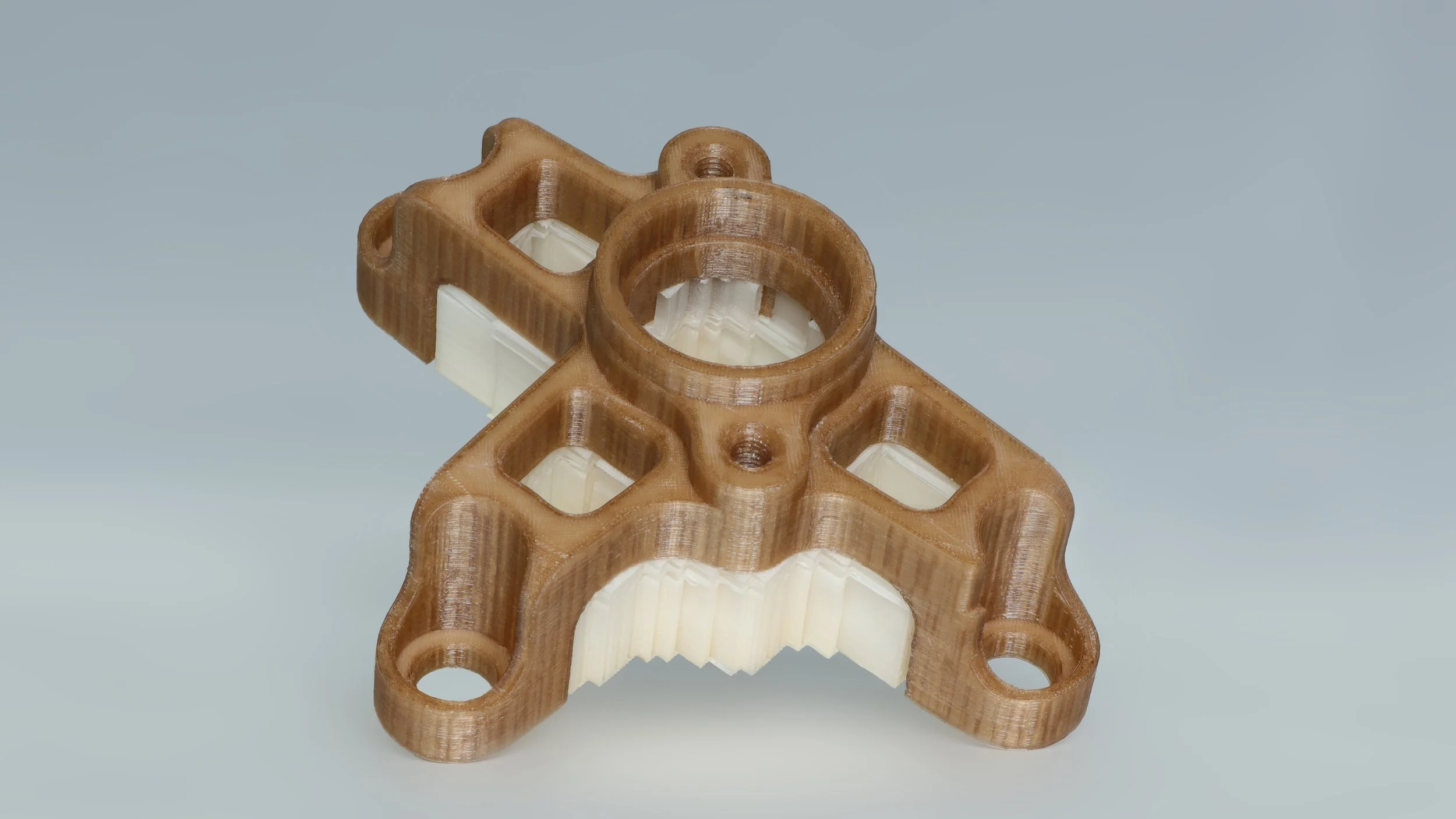
FFF
High-performance polymers
PEEK, PEKK, PC, ABS and engineering thermoplastics. Real mechanical properties.
Best for: functional parts,
demanding environments.
SLS
Nylon & TPU
production
No supports, isotropic properties, batch and serial production. Office-safe installation.
Best for: batch production, functional geometry.
SLA
High-accuracy
resin
Smooth surface finish, tight tolerances, large format. Prototyping and casting patterns.
Best for: prototyping,
casting, visual models.
L-PBF — LASER POWDER BED FUSION
The process that makes real metal parts.
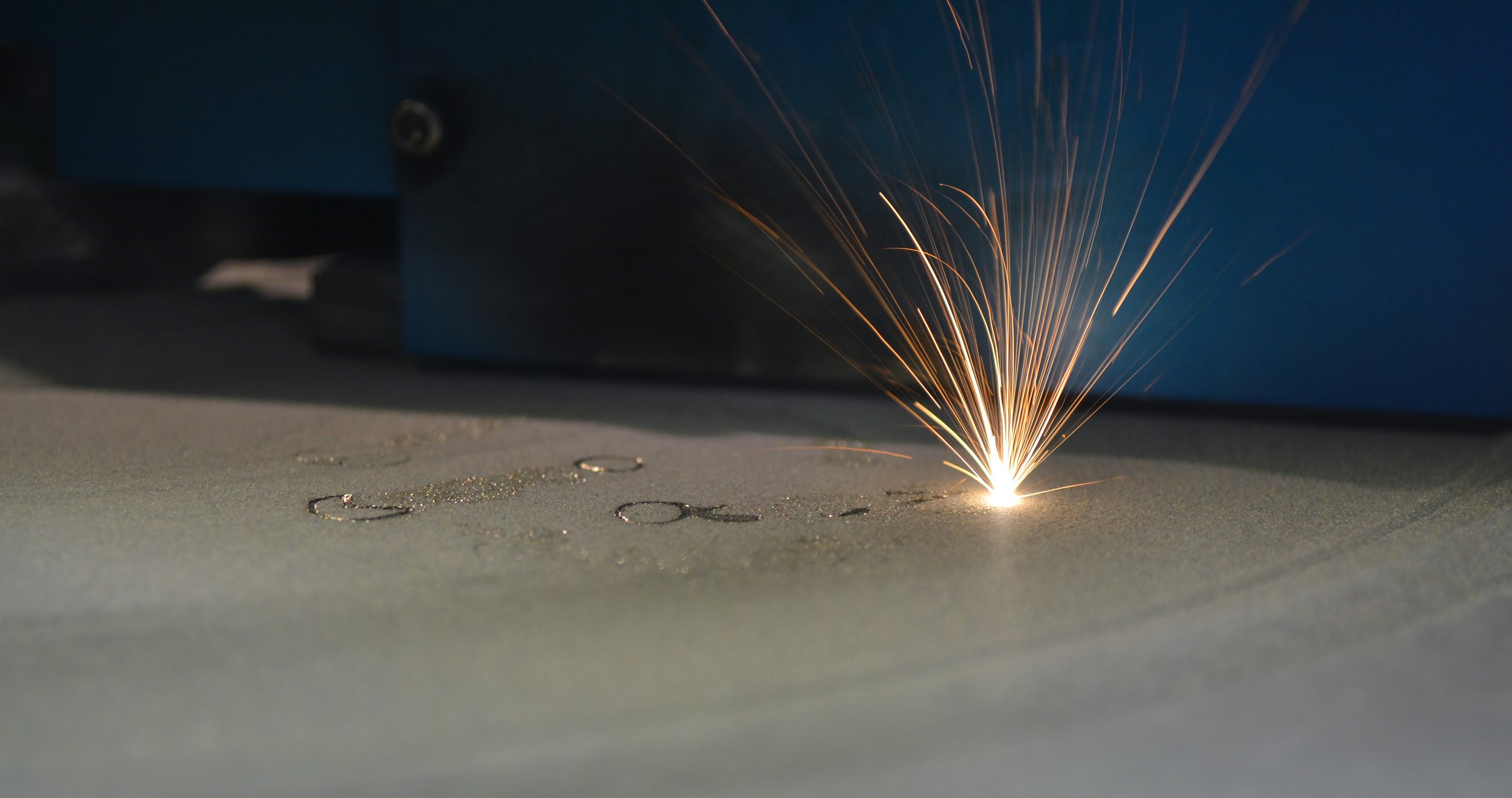
Laser Powder Bed Fusion melts metal powder layer by layer using one or more high-powered lasers. The result is a fully dense metal part with mechanical properties comparable to, and in some cases exceeding, conventionally manufactured equivalents. It is the dominant process for industrial metal additive manufacturing.
What makes L-PBF valuable isn't that it replaces all metal machining. It's that it makes geometries possible that machining cannot produce: internal channels, lattice structures, integrated features at production-viable cost for the right volumes.
Materials:
Titanium, stainless steel, aluminium, copper alloy, nickel alloys, tool steels, Hastelloy and more
Build volume:
160×160×200mm (A160) up to 800×800×650mm (S800) — Z-axis varies per system
Accuracy:
High — only functional or interfacial surfaces typically require post-machining
Surface finish:
Suitable in most cases — post-processing available for critical surfaces Lead time: Hours to days per build
In portfolio:
BLT (Bright Laser Technologies) — A160 through S800

-
What it's good at:
Complex metal geometry impossible or impractical to machine
Conformal cooling channels in tooling inserts
Lightweight structural parts with internal lattice
Low-to-mid volume production without tooling cost
R&D and material testing with small batch capability
Producing parts in alloys that are difficult to machine: nickel alloys, tool steels, Hastelloys
-
Where it fits in production:
Aerospace: structural brackets, engine components, housings
Medical: implants, instruments, patient-specific devices
Tooling: injection mould inserts with conformal cooling
Automotive: lightweight components, low-volume parts
Industrial equipment: custom components, spare parts
-
What to consider:
Post-processing is typically required: support removal, heat treatment, surface finishing
Cost-per-part is higher than polymer processes: justified by material performance
Not cost-effective for very high volumes where casting or forging dominates
Operator knowledge and process development matter for qualification
BLT SYSTEMS IN THE PROTONEX 3D PORTFOLIO:
BLT
A160 — R&D entry
S600 — Aerospace structural
A300 / A320 — Mid R&D
S615 — Tall format
S400 — Production workhorse
S800 — Aero-engine scale
S450 — Large circular parts
FFF — FUSED FILAMENT FABRICATION
Not consumer FFF. Industrial-grade polymers.
Fused Filament Fabrication extrudes thermoplastic filament through a heated nozzle to build parts layer by layer. Consumer FFF machines do this with PLA and basic materials. Industrial FFF does it with PEEK, PEKK, PPS, and engineering thermoplastics that require elevated chamber temperatures to achieve real mechanical properties.
The distinction matters: a PEEK part printed without a properly heated chamber will not perform like PEEK. Most INTAMSYS systems reach up to 90°C in the build chamber, needed for engineering plastics like PPS and PC. The FUNMAT PRO 610HT reaches 300°C, covering the full high-performance thermoplastic spectrum including PPSU and PEI. Chamber temperature is a material science requirement, not a feature.
Materials:
PEEK, PEKK, PAEK, PPSU, PEI, PC, ABS, PA and more
Build volume:
From FUNMAT HT (desktop) up to 610×508×508mm (PRO 610HT)
Accuracy:
Moderate — anisotropic (layer direction affects properties)
Surface finish:
Moderate — layer lines visible, post-processing available
Data security:
All printers can operate fully offline
In portfolio:
INTAMSYS — FUNMAT HT through PRO 610HT
-
What it's good at:
Functional parts in PEEK, PEKK for demanding thermal and chemical environments
Engineering polymer prototypes with real material properties
Jigs, fixtures and end-use tooling in lightweight high-performance polymer
IP-sensitive production where offline operation is required
Continuous production with high throughput at competitive cost
-
Where it fits in production:
Aerospace: brackets, clips, ducting in PEEK
Medical: instruments, implant components, sterilisable parts
Oil & gas: chemically resistant components
Semiconductor: cleanroom-compatible tooling
Industrial: jigs, fixtures, lightweight structural parts
-
What to consider:
FFF is anisotropic: part properties differ by print direction. Design accordingly
Not suited for isotropic requirements where SLS is a better fit
PEEK material cost is significant but you only print what you need, no waste like in milling
Chamber temperature requirements mean not all FFF machines are equivalent, verify specs carefully
INTAMSYS SYSTEMS IN THE PROTONEX 3D PORTFOLIO:
INTAMSYS
FUNMAT PRO 310 — Engineering materials
FUNMAT PRO 410 — Large format PEEK
FUNMAT PRO 610HT — Full spectrum, 300°C chamber
FUNMAT HT — Lab / R&D entry
FUNMAT PRO 310 APOLLO — PEEK high-speed
SLS — SELECTIVE LASER SINTERING
Isotropic polymer parts. No supports. No compromise.
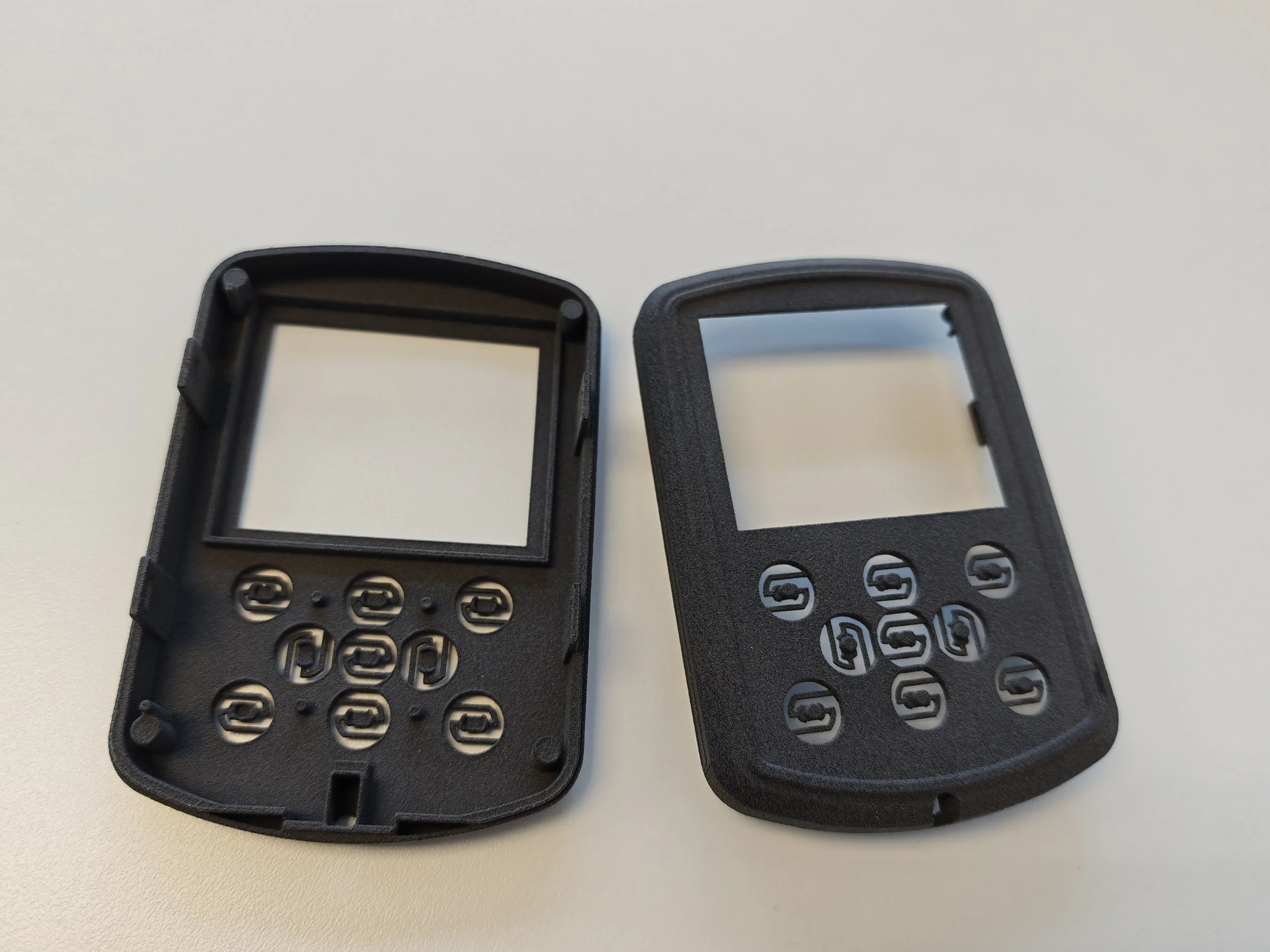
Selective Laser Sintering sinters polymer powder using a laser, building parts within a powder bed that acts as its own support structure. No support material means complex geometries (interlocking parts, internal channels, organic shapes) with no post-processing penalty. Parts are isotropic, meaning mechanical properties are consistent in all directions.
The TPM3D CF200 is CE-certified and 220V plug-in, making it office-safe without industrial power infrastructure. The S-series systems are more industrial in scale and require standard three-phase power, suited for dedicated production environments.
Materials:
PA11, PA12, TPU, and high-performance variants (PPS, PEEK in S-series)
Build volume:
200×200×320mm (CF200) — larger in S-series
Accuracy:
Good — consistent across build volume
Surface finish:
Slightly grainy — typical for SLS, sandblasting improves it
Supports:
None required — powder bed is self-supporting
In portfolio:
TPM3D — CF200 and S-series
-
What it's good at:
Isotropic parts where layer-direction weakness is unacceptable
Complex geometries with no support structure penalty
Batch production of nylon and TPU parts
Flexible and rubber-like parts in TPU
CF200: office-safe installation without industrial power infrastructure
-
Where it fits in production:
Functional polymer parts at batch scale
Consumer products, housings, enclosures
Ducting, connectors, clips with complex geometry
Flexible components in TPU
High-performance variants (S-series): PPS and PEEK for demanding applications
-
What to consider:
Powder handling and refresh ratios affect material cost: factor this into cost-per-part calculations
Surface finish is slightly grainy by default: sandblasting or dyeing is common
Not suited for single one-off parts: economics improve with batch density
Material range is narrower than FFF: for PEEK or engineering thermoplastics, FFF is typically the better fit
TPM3D SYSTEMS IN THE PROTONEX 3D PORTFOLIO:
TPM3D
CF200 + PPS200 — Compact, office-safe, 220V, automated powder handling
S-series — Industrial scale, three-phase power, PPS and PEEK capable
SLA — STEREOLITHOGRAPHY
Precision and scale. Where surface quality matters.
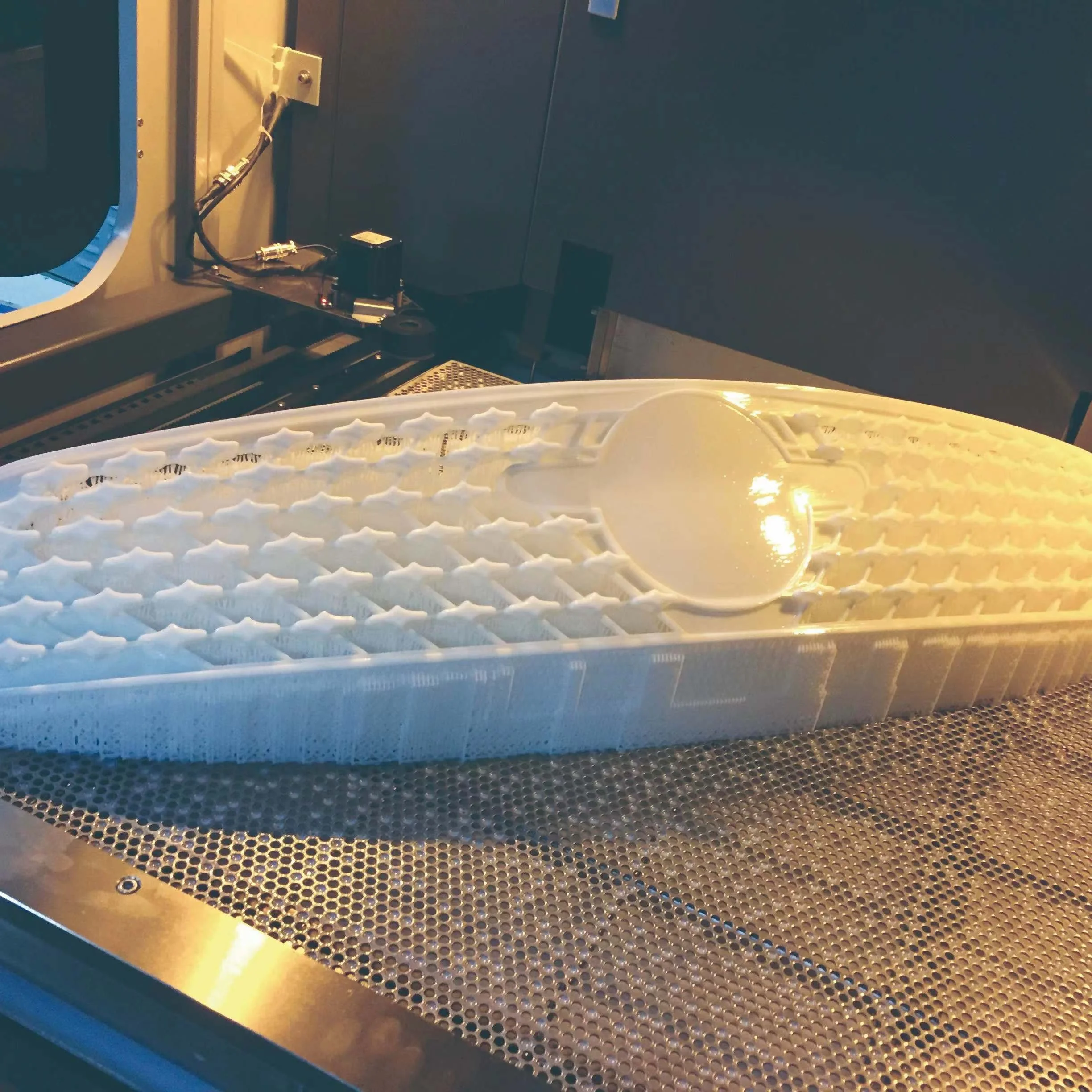
Stereolithography cures liquid photopolymer resin layer by layer using an ultraviolet laser. The result is parts with the highest surface quality and dimensional accuracy of any 3D printing process (and with UnionTech's large-format systems) at build volumes up to 2100×700×800mm that no other technology in this portfolio approaches.
SLA is the process of choice when surface finish and accuracy are the specification, and when part size outgrows what a desktop machine can handle. Investment casting patterns are a strong fit: SLA eliminates the need for a wax pattern tool entirely, compressing lead times from weeks to days.
Materials:
Standard and engineering photopolymer resins — functional, rigid, flexible, castable
Build volume:
Up to 2100×700×800mm — largest format in the portfolio
Accuracy:
Highest of all four processes — tight tolerances as standard
Surface finish:
Excellent — smooth surfaces, fine detail
Post-processing:
UV post-cure required; support removal on complex parts
In portfolio:
UnionTech — Pilot through RSPro 2100
-
What it's good at:
Highest surface quality and accuracy of any process in this portfolio
Investment casting patterns: eliminates wax tooling step
Large-format prototypes at automotive and aerospace scale
Visual models and presentation parts
Sand casting master patterns replacing CNC-machined foam or wood
-
Where it fits in production:
Prototyping: form, fit and visual validation at any scale
Tooling: investment casting patterns for complex metal parts
Automotive: large-scale concept and validation models
Aerospace: full-scale structural mock-ups and casting patterns
Mould and foundry: replacing traditional pattern-making
-
What to consider:
Resin parts are not suited for end-use mechanical applications: material properties don't match engineering thermoplastics or metal
UV post-cure required for full material properties
Support structures needed for overhangs: factor into design and post-processing
Large-format machines require significant floor space and controlled environment
UNIONTECH SYSTEMS IN THE PROTONEX 3D PORTFOLIO:
UNIONTECH
Pilot 250 / 450 — Entry prototyping
RSPro 600 / 800 2.0 — Production SLA, casting capable
Lite 600 2.0 — Mid-range, broad application
RSPro 1400 / 1800 / 2100 — Ultra-large format
DECISION GUIDE
Which process for which requirement?
A quick reference matrix. If your application has multiple requirements, this is where to start narrowing it down.
*if you’re viewing the table below on a mobile device, please click here to view the full image
| Requirement | L-PBF (Metal) | FFF (Polymer) | SLS (Polymer) | SLA (Resin) |
|---|---|---|---|---|
| Metal material required | Yes |
No |
No |
No |
| PEEK / high-perf polymer | No |
Yes |
S-series only |
No |
| Supports needed | Yes |
Yes |
No |
Yes |
| Surface finish | Good |
Moderate |
Good |
Excellent |
| Max build size (X×Y×Z) | 800×800×650mm |
610×508×508mm |
S-series: contact us |
2100×700×800mm |
| Investment casting patterns | No |
No |
No |
Yes |
| Office-safe installation | No |
Yes |
CF200 only |
Smaller systems |
| Fully offline operation | Yes |
Yes |
Yes |
Yes |

NEXT STEP
Not sure which process fits your application?
Tell us what you're building and what it needs to do. We'll identify the right technology and the right machine, no sales pitch, just a clear answer.